Hi all,
So I won't be offended if nobody reads this blog. The main purpose for me writing this is to track my progress and keep my mental game sharp. Whilst reading 'Jared Tender's - Mental Game of Poker', he pointed out that reviewing how you played both strategically and mentally can do wonders for your progression. So if all goes to plan, I hope to give a brief review of my sessions (maybe not daily) and see how I progress over time.
At the end of Jared's book, he provides a questionnaire that has helped many of his clients recognised their own mental game problems. I think this would be a great opportunity to complete the questions to give you all an idea of who I am and also help me build some recognition of my own leaks.
So here goes (sorry about the length, again I won't be offended if nobody reads this).
1. First share a bit about yourself (education, interests, family etc):
My name is Danny, I am 22 years old and I have lived in the United Kingdom my entire life. I live with my girlfriend and am moving house hopefully by the end of next month! I am very close to my family (Dad, Mum and Sister) who live just a few villages away. My Dad started to develop a big interest in poker recently but has stopped playing as much due to variance (I think he feels that poker is unbeatable and only very few people can be winning players). I graduated from university back in 2016 with a First Class Honours Degree in Psychology. I quickly went on to work in a social care setting, looking after vulnerable young people looked after by the local authority.
2. Briefly Describe your poker history. How would you characterise your progress? What game(s)/limit(s) do you play?
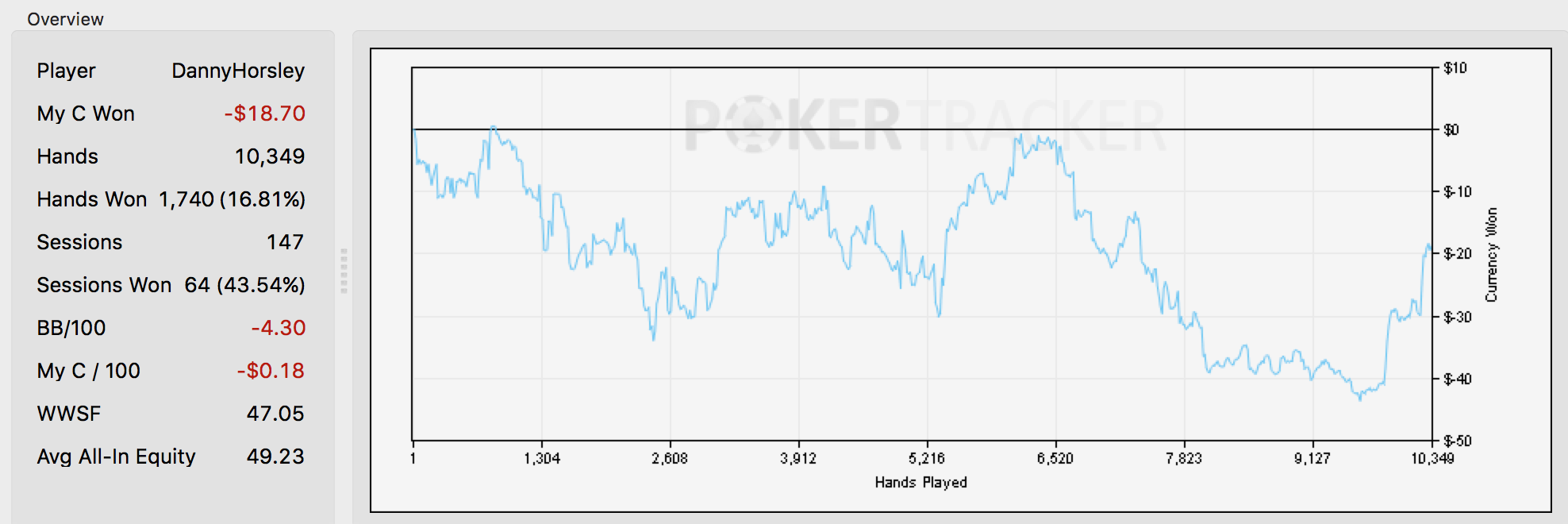
I started playing poker when I was about 20 years old, however I was quite a big fish and after a few months of small losses, I stopped playing. I started playing again towards the end of February of this year. I started off playing a mix of MTT's, SnG's and cash games, but for the past 3 months or so I have played mostly cash games at NL2 and NL5. I was a beating NL2 for about a month and so decided to go up to NL5. I was then breaking even/making a small loss for a while until I had won a small tournament (50c entry and $46 first place prize). From here I went from a bankroll of $97 to $150 whilst multi tabling (4 tables) at NL5. I then decided to try NL10. I won 3 buy ins before going on a huge tilted session and losing 12 buy ins. I went back down to NL5 but took a huge hit to my confidence and eventually lost the lot. Since then I have been making a very small loss. I tend to win a 3 or 4 buy ins over a couple of sessions and then lose them in the next few sessions. I am now playing 6max NLHE at NL5.My graph looks like this:

3. What are your goals in poker? Short and long term.
If I was dreaming, I would say I want to one day quit my job and become a full time pro. However, I want to be realistic and say that I am a recreational player that plays most days when I am not working. I want to slowly work through the limits and make a small profit. I'm not sure what I'll do if I reach higher limits like NL100. In the short term I just want to get back to that period when I was beating NL5. I can't tell if I was just getting lucky or if I had found out how to win at NL5 during that short time period.
4. What personal goals does poker support?
I don't think it does support any personal goals really. I look forward to playing poker most days and it passes a lot of time when I am home alone (I work shifts, so often spend a lot of my time alone whilst friends and family are at work). A lot of my close friends and family believe that poker is a waste of time, its gambling and have a negative view of it. I'd love to prove them wrong and start making some money from it. Nothing big, just enough to prove that poker can be beaten and become a hobby that pays for itself.
5. List and describe the problems in your mental game. List them in order of important to you or by severity. Give as much information as you can, including the triggers, signs and what you believe are the causes.
This is a difficult one, as I feel that I have many mental game leaks, though I've plugged a lot of them. I would probably say that desperation tilt is my biggest leak. I am constantly refreshing my PT4 result to see how much my winnings/losses are. If I am in a profit, I am scared to lose it and if I am in a loss I am eager to win it back. I don't think however that I will ever go on a tilted session again and lose my entire bankroll (but I guess that's what they all say).
I feel that I am good at handling bad beats, regardless of who my opponent is. If a fish sucks out on me on the river when I am a 20:1 favourite, I just tell myself that its variance and I'll win the next 19. I think I have also cured my overconfidence, as there was a time that I felt unbeatable, that I deserved to win every hand (my cbet stat was nearly 100% and it was working!!). However, I think now I am in the opposite direction, I'll often check the second from nuts thinking that my opponent has the nuts.
I am also a sucker for analysing hands during a session. Despite being aware that hand analyses are best saved for after my sessions, I'm always checking to see if I should have played differently.
When I am tilting, I stop reading hands and assigning my opponents ranges. I focus only my two cards and not what anybody else has. If it gets really bad, I may make ridiculous bets with premium hands (shoving on a wet flop with AA hoping a fish calls, to then get called by a flush).
Also, though this isn't a situation that comes up much, I can become very competitive and vengeful against certain players. For example if a player is acting very cocky and insulting everybody at the table, I begin to focus more on taking their money that playing good poker. I may then call with a lot wider range, 3bet them more and call a lot more post flop.
6. What have you tried to do to fix any of these issues? What level of success have you had?
Well I have read The Mental Book of Poker and am here writing this now? We shall see how much it helps. Like I said, I think I've plugged a few mental game leaks, I don't check results as often and am often able to handle coolers/heaters very well.
7. Do factors outside of poker ever affect your play? If yes, how? Does poker ever negatively impact your life if yes, how?
I don't think so, and if they do then not much. Working shifts can be a pain, because it makes playing/studying difficult. My girlfriend finishes work in the evening so often I only play in the morning/afternoon and don't get chance to review after a session in the evening for example. On the other hand, I think this could be a good thing. Working shifts and spending time with my friends and family in the evenings helps give me a break from poker.
I don't think poker affects my person life much. My girlfriend doesn't like that I play, but that's mostly because she thinks its as bad as gambling and you can never win (I understand that it is gambling but I believe massively that you can beat poker with enough time and effort). In the past, if I had a bad session it would affect my mood a lot and sometimes affect how I interacted with people, though that isn't the case as much anymore. It still affects my mood but not as bad or for as long.
8. Why do you love poker? What motivates you to play, why do you love it, what do you get out of it?
I love the feeling that poker gives when I am playing well. Being able to recognise my opponents skills, reading their hands and knowing what they are going to do better than they do. Though this is rarely the case. I think most of all, I love the idea of working towards my goals, aiming towards beating NL5 and playing NL10, then NL20 and so on. I am a very keen gamer and if I wasn't playing poker I would be probably be playing an online game on the xbox or PC (I used to love playing an online RPG called Runescape). So I think thats what I get out of poker, entertainment and enjoyment. Unfortunately it just so happens to be more expensive (when I am losing).
9. List your three to give biggest distractions while plying. Describe why these are a problem.
a) Analysing hands/studying whilst playing. I often browse through forums or watch videos whilst playing, though I've recently started doing this a lot less.
b) My phone. I will often play silly games on my phone or browse social media if I get bored of playing (usually happens after an hour or so)
c) Although it doesn't get as much attention, I feel that having the television on can be a big distraction. After reading Jared's book, it has become clear how important it is to have all of your mental energy on poker. Simply having the television on takes away some of my concentration and I feel that I need to improve a lot more before I can play poker and have TV on in the background.
10. How do you decide when to play? Do you have set times or is it flexible or random?
Having an addictive personality like I do, I try to play poker whenever I can. I usually play poker after I wake up and have done the house jobs (around 10 o'clock) until my girlfriend comes home (around 5 o'clock). However, when I am running bad, I am ere towards studying/reviewing hands and avoid playing poker as much.
11. Describe what you do before you play. How do you warm up, if you do?
This is something I never did before reading TMGP and is something I don't always do now. However, when warming up I will usually review some hands in the hand discussion forum and sometimes some of my own hand histories. Sometimes I may watch a video or read an article instead.
12. What is your average session length?
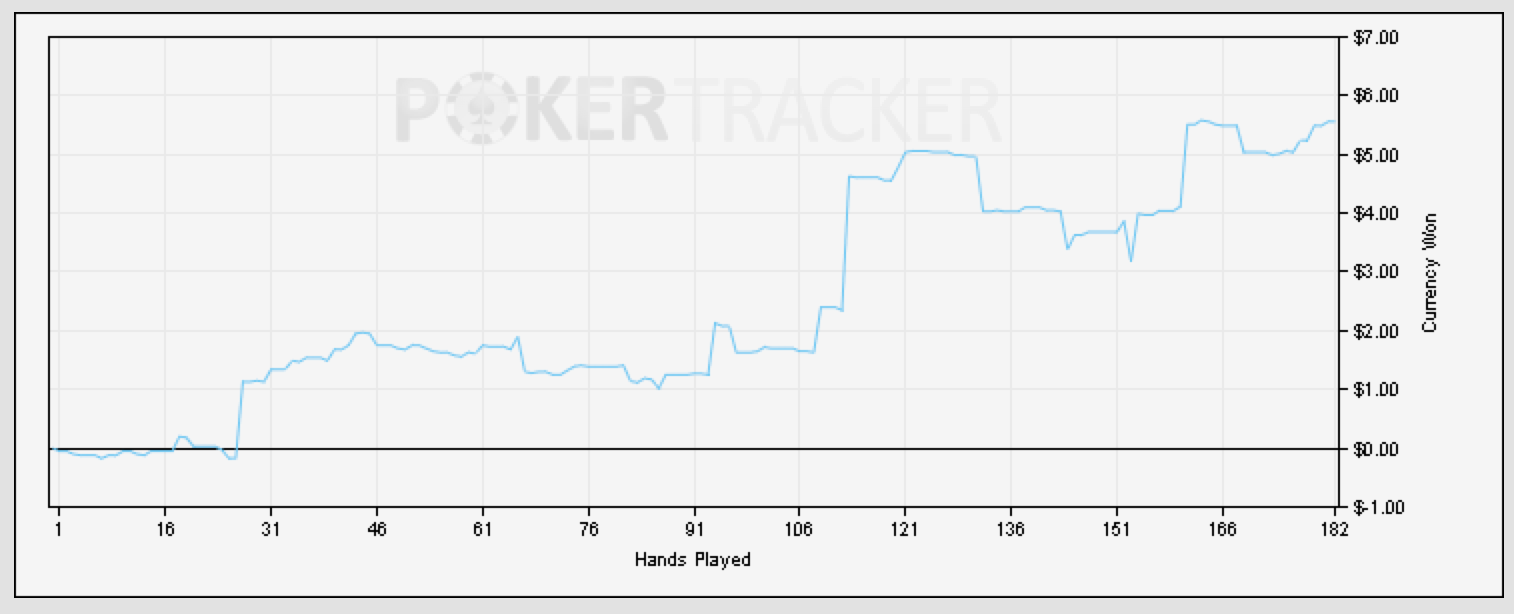
Like I said, I usually play from 10:00 to 17:00. This can sometimes be longer or shorter depending on whats going on in the day. According to PT4, my sessions can range from anywhere between 30 minutes to 4 hours (my longer sessions are noticeably less BB/100).
If anybody is reading this, can you advise on how I can delve into these statistics more? How many sessions do I play per day? How many hours I play per month?
13. What are the reasons that you would quite a session prematurely? Are the problems listed in question 5 ever the cause?
Sadly, no. The reasons in question 5 are rarely the reason. In fact if I am losing a session, I am far more likely to play for longer.
If I end a session prematurely it is usually because I have something else that I need to do (meet friends, make dinner etc).
14. Describe your work ethic. Is procrastination or burnout ever a problem?
According to my session details listed above, yes, burnout is an issue.
Procrastination is also something I may do if I am running bad and will choose to study instead (maybe that's why I am writing this now :f_thumbsup:). Though I think is is quite uncommon, as I will usually much rather play poker than study it.
15. Describe what you do away from the table to improve technically as a player.
I have a membership with RedChip Poker and am working my way through CORE, the study tool that they offer there. I also like to review hand histories in the hand history forum a lot and review my own hands (mostly the hands that I lost big on). Occasionally I will use some sort of equity calculator and thoroughly breakdown a hand and try to hand read off the table whilst covering up the showdown results.
16. Do you ever act without think in a way that's negative? If yes, why? What is the typical situation when it happens?
I don't want to be naive and say no... but no I don't think I do. At least not any more. I used to instal-call in situations where I would now take my time. This is something I feel I do even when tilting. A big leak that I may have fixed.
17. Describe your mindset when you are playing your best.
When I am playing my best, I feel great about poker. My confidence builds and I start to plan how big my bankroll will be in the near future, e.g. "at this rate, in one month I will have $xxx and will be playing at NLxx". I begin to feel that I am the best at the table no matter who I am playing against. I deserve to win the money from the fish and I can even beat the REGs in most situations. Overconfidence maybe? 
18. Do you ever get down about your ability as a player? If so, can it happen after one bad session?
Yes I definitely do get down about my ability as a player. This can happen after one session, though not to the extent where it starts to affect my play. Usually that would require several bad sessions.
19. How well do you typically handle pressure situations in poker or elsewhere (if different than poker) Describe.
In pressurising situations (usually big pots) my heart will often race, however I feel that I am good at stopping and thinking about the hand. Sometimes however, I may hover my mouse over the 'fold' button know that it is the right decision but then thinking "this is NL5, most players are fish, he must be bluffing.. and then click call.
I feel that pressurising situations outside of poker are very simple, I will make rash decisions and say the first thing that comes to my mind. Though in the right circumstances I can stop myself from getting into too much trouble.:f_pleased:
20. Do you have any specific memories in poker that you still think about or that pop into your head randomly? (Bad hands, tournament bust outs, or other).
No, I struggle to remember bad beats or lucky wins (I've had too many of them). The things I remember are mostly positive and my memories are vague. I remember winning my first tournament (the little $46 I mentioned earlier), especially because in the early stages a player sucked out on me and called me a donk. I reacted and we had a little argument. I remember saying "we shall see who the donk is". I recall that he didn't even make the money and I went onto win. I wish I could have contacted him after that lol. 
21. Does thinking about poker ever keep you up at night, or prevent you from enjoying your life? If so, what are you thinking about? Do you ever get stuck thinking about mistakes?
I don't ever dwell over mistakes. I think once a mistake has been made it has been made, there is nothing I can do other than learn from it.
On the other hand, I do think poker affects me away from the table, especially when on a downswing or after a big session. I remember after that big tilted session I was able to sleep after, but only because it was very early in the morning (like 4am) after chasing my losses. It was the downswing afterwards that affected me. I didn't want to do anything else other than play poker until I had started showing a profit. I remember for the first time after a few weeks I had shown a small profit and it was the first time that I booked a win (like $1), hoping that it would fill my confidence and allow me to start playing better.
22. Hypothetical question: You have the ability to magically make any of the issues in question 5 disappear. Which one would you choose? Why? What do you think your game would be like without it?
I would mostly like to play consistently, almost robotically despite what has been going on. For example if I am 5 buy ins up, who cares, lets continue to stay in control and play good poker. 5 buy ins down? Who cares, keep playing, stay in control and think long term.
This is something I really cannot do. I am very results orientated and struggle to recognise when I have played well or played badly.
23. List and/or describe your mental strengths.
I am good at facing bad beats (at least I think I am). Like I said earlier, I can get sucked out on by a fish on the river as a 20:1 favourite and it won't phase me. I may sigh and swear a little but I simply just say "thats poker" and continue my game. Maybe subconsciously it affects my game but I think that may be more down to trying to chase my losses.
There are also a few things that I can uphold whilst tilting. Jared refers to this as being in your unconscious competence level of thinking. For example I can stick to my pre flop ranges well no matter how badly I am tilting. I won't start playing 97o from UTG.
24. Do you take notes on your game after a session? If yes, describe.
No, I don't take notes after my session. I am hoping to start doing so with this blog, though I am not confident that I will keep it up. At the very least I hope I can just write a few brief sentences on my notepad or in PT4 based on how I played both technically and mentally.
25. How much is your evaluation of your ability as a player influenced by results? Describe.
I touched on this earlier, but the answer is, massively. I find it hard to look at a losing session and say "I played well, it doesn't matter that I lost money" or conversely "I am lucky to be in profit today, I played really badly". I have very recently started to look at the "My C-all in Equity Adj" statistic, though I don't truly understand how it is worked out. I just understand that it gives an indication of how much variance played a part in your results.
26. Do you exercise? If yes, on average how often and generally what do you do?
Yes, I am part of a local running club and try to go running with them even Tuesday and Thursday. I run 15km a week, though haven't been running as much lately. I used to run about 30km a week and I am beginning to wonder if this was in any way related to my big upswing, as it was around about the same time.
27. How much do you sleep on average per night? Is sleep ever an issue? If so, describe. What, if anything, do you notice about your play days when you don't sleep well or long enough?
Generally, when I play poker, I have either finished work that morning and not had much sleep the night before due to work (7 hours at most). Or I will have had a good nights sleep, as I have had the day before off and not been to work the following day either (I work on a one on, two off, shift pattern). I don't think my game is affected by sleep however, though this is something I shall look out for and maybe add to my post-session reflections.
28. Do you eat or drink anything when playing? If yes, describe what is typical.
I rarely eat breakfast at home, I will make lunch about 12:00 or 13:00 and use that as a way to take a break from poker. I'll usually have something like a sandwich, toast or a wrap for lunch.
29. Do you smoke cigarettes, drink alcohol, or use any other drugs when playing? If yes, what and how much on average? What effect, positive or negative, do you think it has on your game?
I never drink during the week and when I do it is usually just one or two pints down the pub with my friends. If I decide to play poker when I return home (which I rarely do), it doesn't usually affect my game.
I often have a lot more to drink on the weekends, though I will never play poker if I have done so.
I do not smoke cigarettes or take any drugs.
30. Do you have any medical illnesses at this time? If yes, how does it affect any of the issues in question 5
I do not have any medical illnesses.
31. Do you have any current psychological issues that have been diagnosed by a doctor or someone in the psychological field? If yes, what, if anything, is your current treatment and how do you think it affects any go the issues in question 5?
I do not have any diagnosed psychological issues.
32. Estimate the amount lost per month as a result of the problems you want to address. Also estimate the percent of time you play your A-game.
Assuming that every cent I have lost playing poker is a result of my mental game leaks, then I will have lose approximately $40 a month because of it. However, knowing that this is very unlikely the case, I'd probably round it down to maybe $20-$30 per month, maybe even less as my technical game is by no means perfect.
Assuming that we all have an A, B and C-game, I would say that I spend about 10% of my time playing in my A-game. This may be higher but I cant remember the last time I felt that I played an amazing game, regardless of results.
----------------------------------------------------------------------------------------------------------------------------
So that took a lot longer than I thought (sorry about that).
From here I want to start playing a bit of poker and analysing my sessions. Focusing more on how I play rather than what the result was.
I may post some bad beats as a way of venting frustrations or some other random hand histories, so feel free to comment on them but they will most likely be in the hand history discussion section of the forum.