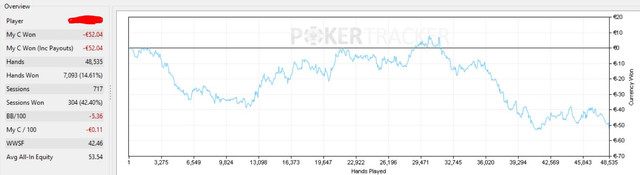
Nice! That’s what we want to see!... So....
Stealing
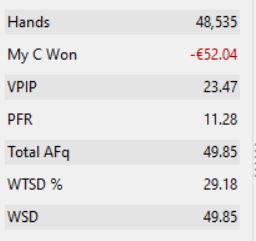
Stealing in those games is so darn profitable! But you don’t do it nearly enough. My steal in those games would probably be closer to 60% rather than the 15% or so that you showed.
If the villains fold most their blinds, or if they call the opens and fold to Cbets, I would steal and then Cbet with any hands as it makes clean profit. If those two bets fail to get a fold, to prevent negative implied odds, you will need to tighten up like butt-cheeks in a Tai brothel.
Defence Against Stealing
It looks like you are the kind of guy who does that same thing: it looks like you fold to lots of steals and then fold often postflop too. Therefore, you will find some villains abusing you in the way I just described.
To counter these guys you first need to identify them by looking to their steal %, if this is high (like my 60%) and they fold often, 3bet and barrel often as bluffs with improving hands. If their steal is high but they don’t fold often, 3bet and barrel often when you have all kinds of value hands. Like broadway cards preflop or tp on the flop.
Folding Postflop
You are folding way too often postflop. GTO is going to be something like 35% fold to Cbet but you are folding about 60%! This will be bleeding redline. If any half decent reg sees those numbers he will Cbet against you with any hand.
To amend this problem, you need to follow the villains range and bluff raise his cbets when his range mostly misses the board. You also need to stop putting yourself in these situations so much by refraining from calling the villains preflop bets.
The Two Reasons for Betting
These stats lead me to believe that you are a “value man”. You bet very few flops but barrel far more turns. This shows me that you generally just bet when you have a hand.
You need to be fully aware that there are two types of profit you can aim to make in poker:
Value: Getting the villain to continue with a weaker hand than your holding.
AND
Bluff: Getting the villain to fold a stronger hand than your holding.
Level Two
To calculate those two types of profit you need to put the villain on a range. When a player is capable of this we call him a Level Two player.
You appear to be what we call a Level One player. It looks like you are not following the villains range much if at all.
Your thought-process is very important at the tables. To maximise your profit you have to follow the villains range. If you address this one issue you will find that all those above issues solve themselves.
At the start of a hand, when the cards are dealt, each villain has 100% of cards in his range. Then everytime he makes an action, we reassess his range. It’s like a game of “guess who”: As the villain makes decisions we simply remove hands from his range as they become unlikely.
The way you will assess the villains holding as a Level Two player is by looking at his past actions. If he opens 60% of buttons we assign him a range containing 60% of hands.
Once you can see that the villain is stealing from the button with a range of hands containing T2o you realise that you need to attack for those folds. Thus the above problems will be mostly solved without having to address each individual hole directly.
If you can do all that, you will be a level Two player.
Level Three
Once you can do that it’s time to start following your own perceived range: Everytime you make a move, imagine that you are the villain and imagine which hands he will take from your range.
Once you can follow your own perceived range you realise that the villains overall stats only give us an overall idea of his range in certain situations. To gain a better understanding of the villains range we can now consider his understanding of his opponents:
If he thinks his opponent has a strong hand, and he bets, we can assume that he has a much stronger holding than his opponent appears to hold.
Whenever the villains opponent is us, we can use this same information to lure the villain into believing we hold hands that we don’t. We can start trying to make our hand look weak when we’re strong so that the villain comes along. We can try to look strong when we’re weak to make the villain fold.
At level Two you read the villains range, at level three you take control of the villains range.
Once you reach level three and are following both these ranges reasonably accurately you are almost certain to be a winning player and so your problem with results will be over.
Ps... My assessment of you here is completely guesswork. If I had more stats I would be able to make a more detailed assessment. Making assessments like this is exactly how I make money from my villains so I am pretty good at it. As you have shown me stats for many hands and have spoken about your hands I’m pretty confident everything I’ve written here is accurate.
If you would like me to work through your thought-process with you to boost you upto Level Three you need to write a detailed description of any 1 decision. In this description you need to point out every single factor you would consider at the tables, but your math can be rough estimations. I’d then go through your assessment and would point out all the factors that you missed.





 VS
VS