Course: Spin & Go Beginner Strategy – Opponent-specific play
Welcome back to the last theory lesson of this course! So far, you've worked out a general game plan for Spin & Gos and refined it in a way that also allows you to make good decisions post-flop.
However, up to now, you're following the exact same strategy against any opponent. In reality, though, you should have noticed that your opponents play very differently. Some are highly aggressive, while others are extremely cautious, even folding hands when they only have 2 or 3 big blinds left.
You can further increase your expected value by adapting your strategy specifically to your opponents. The basis for this approach is the following article:

This topic is also covered in the following video:

4 tips for opponent-specific play in Spin & Gos
1) Limping with mediocre hands against aggressive opponents
Observation: Your opponent is a maniac who really likes to play aggressively. You were able to notice that because he has shown several weak hands at showdown. Hands that you would have folded without blinking were played very aggressively by him.
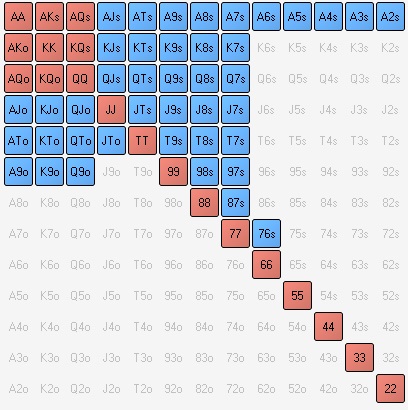
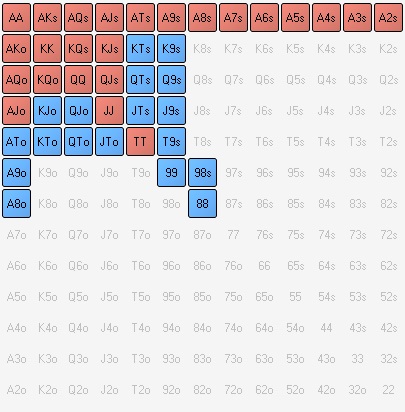
Adjustment: Your opponent is looking for weakness and way too aggressive once he finds it. Start limping with strong hands (e.g. AK, AQ, TT) and mediocre hands (e.g. ATo, 88, A5s). Your opponent will go all-in with a lot of weaker hands.
If you would enter the hand with an open-raise, your opponent is likely to fold hands like K6o etc. When you limp, there's a much higher chance that he will go all-in because he expects you to fold.
2) Slow-play against very aggressive opponents
Observation: Your opponent plays a lot of unnecessary bluffs, especially once he notices weakness.
Adjustment: Start checking strong and mediocre hands on the flop, thereby giving your opponent the opportunity to lose more money with weak hands. Wait for the river to go all-in.
3) Directly betting strong hands and draws against passive opponents
Observation: Your opponent often skips continuation bets and doesn't bet often enough with made hands.
Adjustment: Start betting strong hands directly yourself instead of waiting on a continuation bet from your opponent.
4) Going all-in with any hand when your opponent is way too passive
Observation: Your opponent still folds a lot of hands with a small stack.
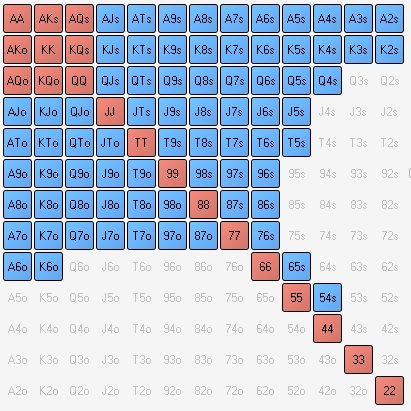
Adjustment: Simply start going all-in with any hand. In this particular case, the unexpected fold equity will make this playing style profitable.







 - the serious point is that it really shows the extreme of variance that the spins add...
 At $5 spins, I've played 395 in total for an ROI of 38.5%!!! My all in chip ev is now 21,928 (55.5 chips per game).